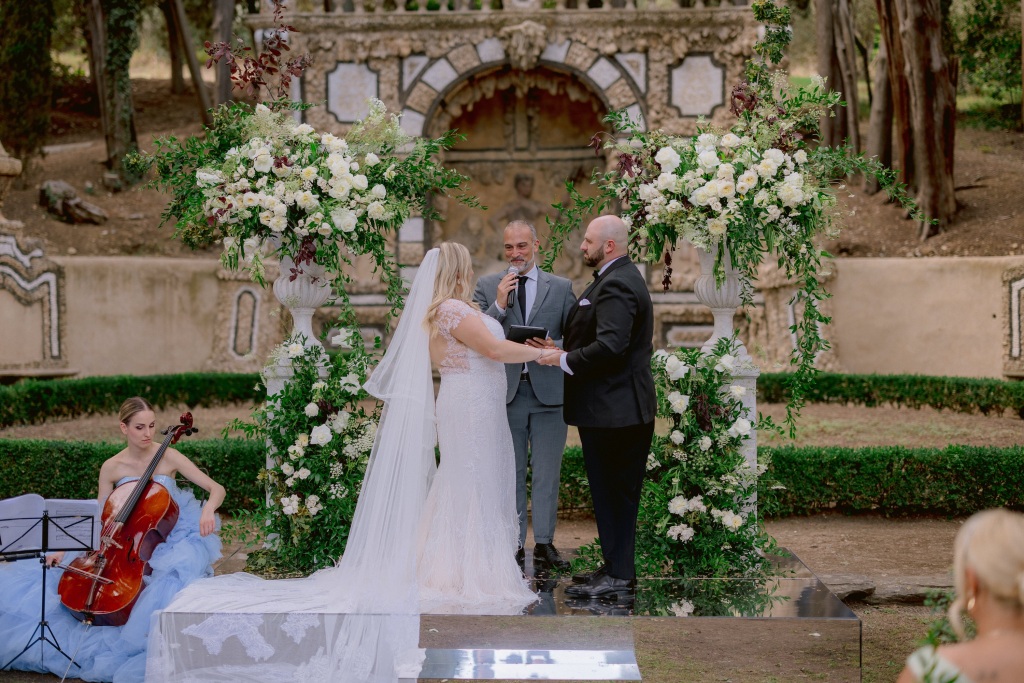
A symbolic wedding isn’t defined by legal paperwork, but it’s defined by meaning and pure intention. When couples from all over the world choose a destinatination, they’re drawn by the beauty of the place, yes, but also by the possibility of shaping a moment that feels authentically theirs. In this guide, we walk through what a symbolic wedding ceremony really is, how it works, and what it feels like, not just what it looks like.
A symbolic ceremony has no legal effect, and that’s exactly part of its strength. It gives you freedom: to choose words, timing, rituals, language, and space — all without constraints. Rather than fulfilling legal requirements, your ceremony becomes a reflection of who you are and what this union means to you. It’s about emotional authenticity more than formality.
Why Couples Choose Symbolic Ceremonies
There are a few recurring reasons I hear from couples time and again:
freedom to shape your moment since you aren’t bound by legal structure;
language that speaks to everyone, with no need for translations constrained by legal wording; your ceremony can feel natural in English, Italian, or both;
flexibility of
location. From historic villas to lakeside gardens or simply on the shoreline, the ceremony can be wherever feels right to you.
None of this means it’s casual, just it belongs to you.
What a ceremony typically includes
There’s no one formula, but most meaningful symbolic ceremonies unfold in a way that feels natural and balanced:
- Welcome & intention
- Couple's story
- Reflections on commitment
- Personal vows
- Exchange of rings
- Optional symbolic ritual
- Closing words
A good ceremony feels coherent as an emotional experience, not like a checklist.
True personalization isn’t about adding random elements for the sake of them. It’s about integrating gestures and words that reflect you: your history, your values, your pace.
When you feel permission to speak your truth, the ceremony resonates with guests and couples alike.
Common misconceptions
“Symbolic means less meaningful.”
Often it’s the opposite: couples say this was the part of the day they remember most deeply.
“It’s not a real wedding.”
But what's the meaning of "real". It's the combination of the two aspects: legally and emotionally? The moment you exchange vows, you are married in the way that matters to you. Then you're always in time to complete the process with a legal binding ceremony at the courthouse in a different moment.
In the end, you create a ceremony and shape it around who you are instead of what’s prescribed. That’s not just freedom. That’s presence.