26/02/2026
What makes a ceremony truly unrepeatable
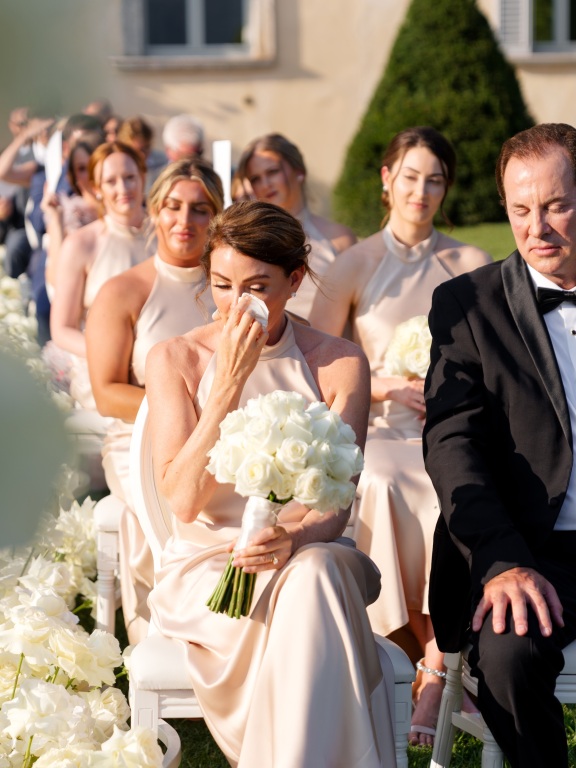
Every wedding ceremony happens once, but not every ceremony is truly unrepeatable. There is a difference between a moment that is simply unique in date and one that could never belong to anyone else, and this difference matters more than international couples often realize while planning a destination wedding.
So what actually makes a ceremony unrepeatable?
It starts with listening.
Many scripts begin with a casual meeting that leads the celebrant to create a truly unrepeatable ceremony. The process seems pretty easy at first: it’s important to know how the couple met, what changed them as individuals, and many other pivotal moments of their lives. When the celebrant listens deeply, a pattern emerges, because an unrepeatable ceremony is built from the couple.
It reflects personality.
Then there is a subtle but important difference between personalization and performance. Let’s just say that personalization tends to be accurate, while performance tries to give a tone to the moment, and a good celebrant will perfectly balance the two, avoiding exaggerated emotion. When something is too forced, it doesn’t look natural.
Instead, personalization mirrors the couple’s pace, together with their dynamic, and sometimes adding one or two inside jokes will result in something familiar to everyone.
Furthermore, the celebrant’s attitude makes a big difference. If they’re calm, the ceremony feels calm; if they’re witty, there’s room for lightness. And this will be possible only if there’s a good connection with the celebrant—the stronger the connection, the more accurate the ceremony will be, and that accuracy is what makes it yours.
It balances emotion with structure.
Emotion alone doesn’t create memorability, but rather a complexity of elements. Above all, there’s a good structure capable of holding emotion, without which emotion can only fade away.
A ceremony that feels unrepeatable has:
- a clear opening address
- a narrative arc
- space for vows
- moments of inclusion (for those who deserve it)
- a sensible closing
An experienced celebrant understands this balance instinctively, especially in destination weddings where timing and coordination matter.
It lives in the details no one else notices.
Bride, groom, and guests remember how a ceremony felt, but what creates that feeling often lies in subtle details, such as the choice of words that sound natural or the decision to shorten or expand certain sections, even on the spot, according to the situation (maybe it’s too hot or a looming storm is fast approaching).
Sometimes even silence is used; it gives the opportunity to let an important topic sink in. And it’s not a theatrical technique, but rather an act of care, because nuances do matter when the celebrant is crafting a ceremony that is supposed to be unforgettable.
And here is the simple litmus test: if the ceremony could be delivered to another couple without anyone noticing, it means it’s not truly a bespoke ceremony, which, on the other hand, should feel aligned with who the couple is.
Presence doesn’t mean ego.
An unrepeatable ceremony is about the couple being memorable, not the celebrant. A professional celebrant knows when to step aside, allowing emotion (and photo shots) to unfold without them in the background. When the celebrant disappears into the moment, the ceremony belongs fully to the couple, and that ownership is what makes it unrepeatable.